
Selecting the right pressure sensor is a critical step when designing OEM equipment. For engineers and designers, a helpful pressure sensor selection guide can prevent costly mistakes. Choosing the wrong sensor can lead to inaccurate measurements, premature failure, or costly redesigns later in development.
This pressure sensor selection guide explains the key engineering factors to consider when choosing a pressure sensor or pressure transducer for your application. Understanding these variables will help ensure reliable performance, accurate measurements, and long-term durability.
Determine the Required Pressure Range
The first step in any pressure sensor selection guide is identifying the correct pressure range.
Pressure sensors are rated for a specific full-scale range such as:
- 10 PSI
- 100 PSI
- 1,000 PSI
- 5,000 PSI
- 10,000 PSI
However, selecting the correct pressure range involves more than simply matching the system’s operating pressure.
Engineers should also consider:
- Operating pressure
- Pressure spikes
- Proof pressure
- Burst pressure
For example, if a hydraulic system normally operates at 300 PSI but occasionally experiences spikes up to 500 PSI, selecting a 300 PSI sensor could result in premature failure. In this case, a 500 PSI or 600 PSI pressure sensor would likely be a better choice. Choosing the proper pressure range improves reliability and helps protect the sensor from unexpected pressure spikes.
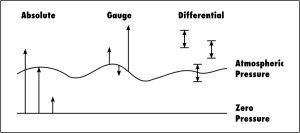
Gauge vs Absolute vs Differential Pressure Sensors
Another important step in a pressure sensor selection guide is determining the correct pressure reference type.
Gauge Pressure Sensors (PSIG)
Gauge pressure sensors measure pressure relative to atmospheric pressure.
Common applications include:
- Hydraulic systems
- Pneumatic systems
- Industrial machinery
Absolute Pressure Sensors (PSIA)
Absolute pressure sensors measure pressure relative to a vacuum reference.
Typical applications include:
- Vacuum systems
- Altitude measurement
- Barometric pressure monitoring
Differential Pressure Sensors (ΔP)
Differential pressure sensors measure the difference in pressure between two points. Instead of referencing atmospheric pressure or a vacuum, the sensor compares pressure at two separate ports.
These are commonly used in:
- Flow measurement
- Leak Detection
- HVAC Systems
Evaluate Accuracy Requirements
Accuracy is often misunderstood during pressure sensor selection. Industry standards such as those published by the National Institute of Standards and Technology (NIST) define measurement traceability and calibration practices used in many industrial sensors.
Pressure sensor accuracy is typically specified as a percentage of full scale:
- ±1.0% FS
- ±0.5% FS
- ±0.25% FS
For example, a ±0.25% accuracy pressure sensor with a 1000 PSI range could vary by ±2.5 PSI.
When determining accuracy requirements, engineers should consider:
- Whether the pressure measurement is used for control or monitoring
- How sensitive the system is to measurement error
- The effects of temperature variation on sensor performance
Select the Appropriate Output Signal
The output signal determines how the pressure sensor communicates with the control system.
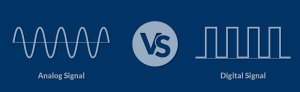
Analog Outputs
Common analog outputs include:
- 4–20 mA
- 0–5V
- 0.5–4.5V (ratiometric)
- 0–10V
Analog pressure sensors are widely used because they are simple to integrate and perform well in industrial environments.
Digital Outputs
Digital pressure sensors may offer outputs such as:
- I2C
- SPI
- RS485
- Modbus
Digital outputs can provide higher resolution measurements and allow easier integration with microcontrollers or modern control systems.
Consider Environmental Conditions
Pressure sensors must operate reliably in the environment where they are installed.
Important environmental factors include:
- Operating temperature
- Shock and vibration
- Moisture exposure
- Chemical compatibility
Equipment used in industries such as oil and gas, construction equipment, or marine systems often requires rugged sensors designed to withstand high vibration and extreme temperatures. Sensors used in harsh environments may require high ingress protection ratings. The IEC standard for IP ratings defines the level of protection against dust and water.
Choose the Correct Mechanical Connection
Pressure sensors must match the mechanical interface of the system where they are installed.
Common port and thread types include:
- 1/4″ NPT
- 1/8″ NPT
- 7/16-20 UNF
- 9/16-18 UNF
- 1/4 BSPP
Using the wrong thread type can cause sealing issues or installation problems.
Evaluate Electrical Connections
Electrical connection options vary depending on installation requirements and environmental conditions.
- Cable with flying leads
- M12 connectors
- Packard connectors
- Custom cable assemblies
In harsh environments, integrated cable assemblies with proper strain relief can improve long-term durability.
Consider Sensor Size and Packaging
In compact equipment, sensor size may become an important design constraint.
Miniature pressure sensors are often used in:
- Medical devices
- Aerospace systems
- Portable equipment
- Compact hydraulic systems
However, smaller sensors may involve tradeoffs in pressure range, durability, or environmental protection.
Conclusion
Selecting the right pressure sensor requires evaluating multiple factors, including pressure range, reference type, accuracy, output signal, environmental conditions, and mechanical compatibility.
Following a structured pressure sensor selection guide helps engineers choose a sensor that delivers reliable performance while avoiding common design mistakes.
Need Help Selecting the Right Pressure Sensor?
Phoenix Sensors designs and manufactures custom OEM pressure sensors and pressure transducers for demanding applications across industries such as oil and gas, aerospace, industrial equipment, and heavy machinery.
If you are designing new equipment or replacing an existing pressure sensor, our engineering team can help you identify the best solution for your application. Contact us today!