
Choosing the right RTD temperature sensor is a critical decision in OEM system design. Whether you are an engineer designing a control system or a procurement manager sourcing components, selecting the wrong sensor can lead to inaccurate measurements, system inefficiencies, or premature failure.
This guide explains how RTD temperature sensors work and walks through the key decisions including how to select an RTD sensor, choosing between Pt100 vs Pt1000, understanding RTD accuracy class A vs B, and selecting the right wiring configuration such as 2 wire vs 3 wire vs 4 wire RTD setups.
What is an RTD Temperature Sensor and How Does It Work?
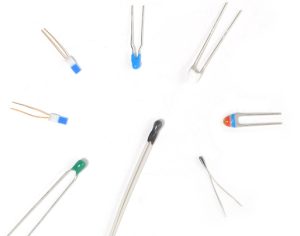
A RTD temperature sensor (Resistance Temperature Detector) measures temperature by correlating resistance with temperature. As temperature increases, the electrical resistance of the sensing element increases in a predictable and repeatable way.
RTDs are typically made from metals such as platinum, nickel, or copper. Platinum is the most common due to its stability and linear resistance-to-temperature relationship.
How it works in practice:
- A small current is passed through the RTD element
- The voltage drop is measured
- Resistance is calculated and converted into temperature
RTDs are widely used because they offer:
- High accuracy and repeatability
- Stable long-term performance
- Wide operating temperature ranges
Compared to thermocouples and thermistors, RTDs are often the preferred choice when precision and consistency matter more than cost or extreme temperature range.
Pt100 vs Pt1000: Which RTD Should You Choose?
One of the most common decisions when selecting an RTD temperature sensor is choosing between Pt100 vs Pt1000.
Key differences:
| Parameter | Pt100 | Pt1000 |
|---|---|---|
| Base resistance | 100 ohms | 1000 ohms |
| Sensitivity | Lower | Higher |
| Lead wire error impact | Higher | Lower |
| Noise immunity | Lower | Higher |
When to use Pt100:
- Industrial systems with established standards
- Short lead lengths
- Applications where compatibility is required
When to use Pt1000:
- Longer cable runs
- Systems where minimizing lead wire resistance error is critical
- Lower power measurement circuits
Practical insight:
Pt1000 sensors reduce the impact of lead wire resistance, which can improve measurement accuracy without requiring more complex wiring configurations.
RTD Accuracy Class A vs B Explained
Accuracy is one of the most misunderstood aspects of RTDs. According to IEC 60751 standards, RTD accuracy class A vs B defines tolerance levels.
Standard tolerances:
- Class A: ±(0.15 + 0.002|T|) °C
- Class B: ±(0.30 + 0.005|T|) °C
What this means in real applications:
| Class | Best Use Case |
|---|---|
| Class A | Precision measurement, lab equipment, medical devices |
| Class B | General industrial applications, HVAC, equipment monitoring |
Important consideration for RTD Temperature Sensors:
RTDs are typically calibrated at 0°C. As you move away from that temperature, accuracy decreases. This means your actual operating range matters just as much as the tolerance rating.
Common mistake:
Selecting Class A when the rest of the system cannot support that level of accuracy, leading to unnecessary cost without performance benefit.
2 Wire vs 3 Wire vs 4 Wire RTD Temperature Sensor Configurations
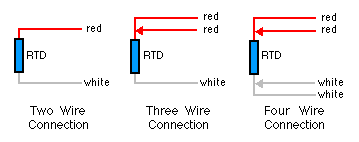
Another key decision when learning how to select an RTD sensor is choosing the correct wiring configuration.
2-Wire RTD
- Simplest configuration
- Lowest cost
- Least accurate
Limitation:
Lead wire resistance adds directly to the measurement, causing error.
3-Wire RTD
- Most common industrial configuration
- Provides compensation for lead resistance
- Good balance of cost and accuracy
Best for:
General industrial and OEM applications
4-Wire RTD
- Highest accuracy configuration
- Eliminates lead resistance error
- More complex and higher cost
Best for:
High-precision measurement systems
Summary comparison:
| Configuration | Accuracy | Cost | Use Case |
|---|---|---|---|
| 2-wire | Low | Low | Basic applications |
| 3-wire | Medium | Medium | Industrial standard |
| 4-wire | High | High | Precision systems |
Key Factors When Selecting an RTD Temperature Sensor for OEM Applications
Selecting the right RTD temperature sensor requires evaluating multiple factors beyond just resistance and accuracy.
1. Temperature Range
Ensure the sensor operates within your full temperature range, including extremes.
2. Accuracy Requirements
Match the RTD class to your system’s actual accuracy capability. Over-specifying increases cost without benefit.
3. Environmental Conditions
Consider:
- Moisture or washdown environments
- Vibration and mechanical stress
- Chemical exposure
Sensor construction (overmold vs epoxy, sheath material) plays a major role here.
4. Mechanical Design
- Probe vs element
- Mounting requirements
- Size constraints
5. Electrical Interface
- Output signal requirements
- Wiring configuration
- Connector or cable assembly
6. Cost vs Performance Trade-Off
Balance:
- Sensor accuracy
- Installation complexity
- Long-term reliability
The lowest cost option upfront may lead to higher failure rates or maintenance costs.
RTD Temperature Sensor Applications
RTDs are used across a wide range of industries:
- HVAC systems for temperature control
- Industrial equipment monitoring
- Automotive systems and engine components
- Medical and laboratory equipment
- Food processing and refrigeration
Their combination of accuracy and stability makes them ideal for both controlled environments and harsh industrial conditions. 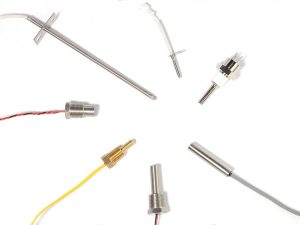
Explore RTD Temperature Sensors from Phoenix Sensors
Phoenix Sensors offers a range of RTD temperature sensor solutions designed for OEM applications, including:
- RTD sensor elements (Pt100 and Pt1000)
- Rugged probe assemblies
- Custom-designed RTD solutions
Explore available options by Phoenix Sensors.
Need Help Selecting the Right RTD Temperature Sensor?
Selecting the right RTD temperature sensor can be complex, especially when balancing accuracy, environment, and system design requirements.
If you are unsure which configuration is best for your application, our team can help.
Send us your application details, drawing, or current part number, and we will recommend a solution tailored to your system requirements.