
Home | Applications |
Autonomous Aircraft Sensors for Military UAVs
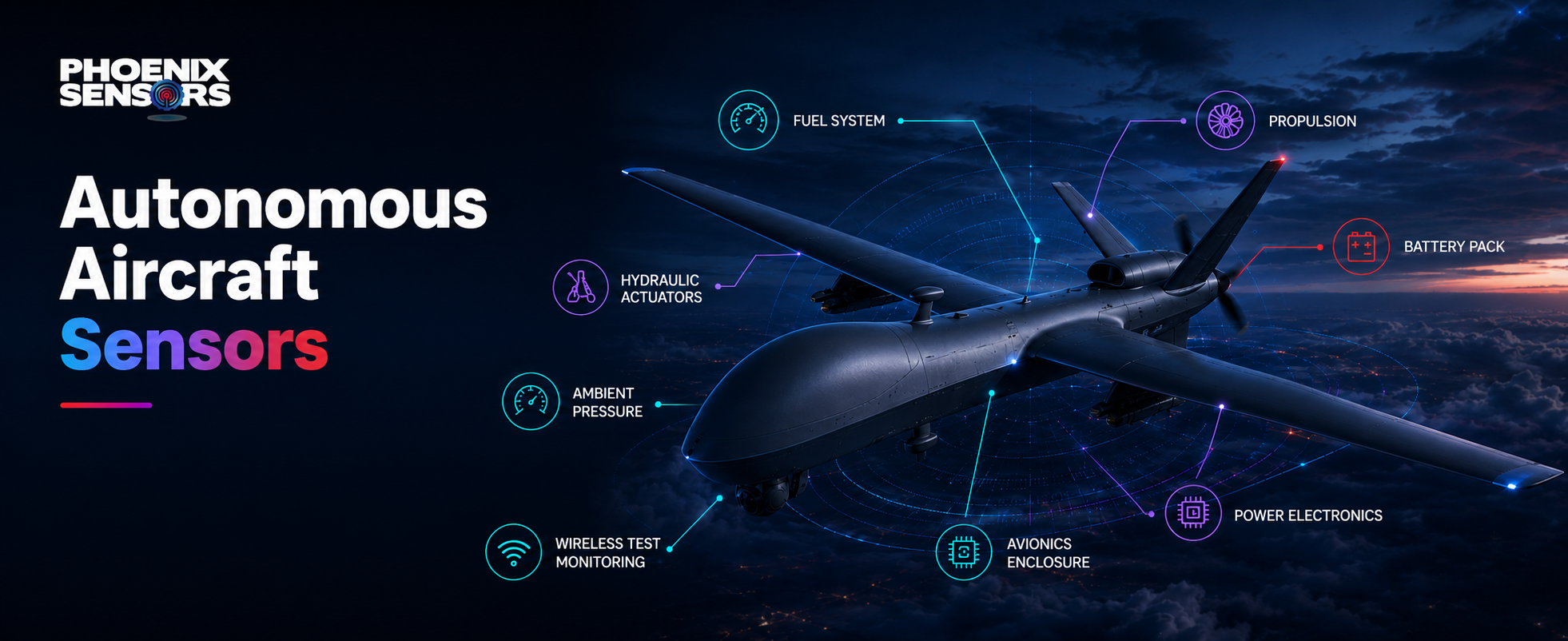
Phoenix Sensors develops custom pressure, temperature, wireless, and cable assembly solutions for autonomous aircraft, military UAVs, collaborative combat aircraft, and long-endurance unmanned aerial systems. Autonomous aircraft sensors provide the measurement feedback needed to monitor fuel, lubrication, propulsion, hydraulic, pneumatic, battery, thermal-management, and environmental systems when no crew is aboard to recognize a developing fault.
We are a U.S.-based sensor manufacturer in Chandler, Arizona, supporting aerospace and defense OEM programs from early prototype development through production.
Sensor Monitoring Across Autonomous Aircraft and UAV Systems
An autonomous aircraft may operate without a pilot onboard, but its physical systems remain subject to the same mechanical and electrical realities as any other aircraft. Pumps wear. Filters load. Bearings heat up. Batteries develop thermal imbalances. Connectors loosen under vibration. The difference is that no crew member is available to see, hear, or feel the warning signs.
Instrumentation provides that visibility. Reliable UAS sensor data can support remote diagnostics, fault detection, condition-based maintenance, automated protective actions, fuel and energy management, thermal control, and post-flight troubleshooting. Trending pressure and temperature data can also reveal gradual degradation before it becomes an in-flight fault or causes secondary equipment damage.
The need for configurable sensing architectures is growing as autonomous aircraft move from isolated demonstrators toward multi-vendor defense programs. The U.S. Air Force Collaborative Combat Aircraft program is implementing a modular, government-owned autonomy architecture across multiple aircraft platforms, reinforcing the need for subsystems and instrumentation that can be integrated into different vehicle designs.
Applications for Autonomous Aircraft Sensors
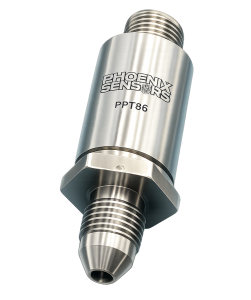
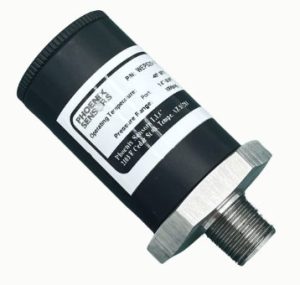
PPT86 Aerospace Pressure Transducer
Fuel, Oil, and Hydraulic Systems
Pressure sensors can monitor fuel pump output, fuel transfer lines, filter restriction, engine oil pressure, gearbox lubrication, hydraulic pumps, actuators, braking systems, landing gear, and flight-control hydraulics where those systems are present. Comparing pressure before and after a filter can identify increasing restriction, while pump inlet and outlet measurements can help distinguish a supply problem from a failing pump.
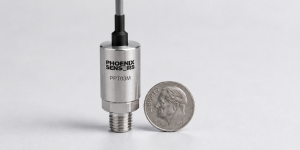
PPT03M Miniature Pressure Transducer
The PPT86 aerospace pressure transducer is one example of a compact stainless steel platform for high-temperature and high-pressure measurement of compatible liquid, air, and gas media. For installations where size and weight are major constraints, the PPT03M miniature pressure transducer offers a 0.65-inch body with analog and digital output options. Final range, media compatibility, pressure connection, wiring, environmental protection, and qualification requirements must be reviewed for each aircraft application.
Fuel-level measurement requires more than installing a standard tank sensor. Aircraft attitude, acceleration, slosh, tank geometry, fuel type, unusable fuel volume, and mounting location can all affect the measurement. Phoenix Sensors can evaluate custom liquid-level and fluid-monitoring approaches, but suitability must be determined around the complete fuel-system design.
Propulsion and Thermal Management
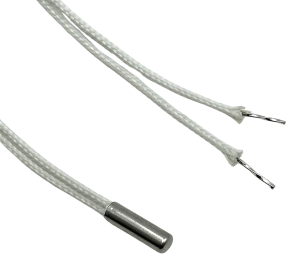
PRTD10-1K-FG RTD Temperature Sensor
Combustion, turbine, hybrid-electric, and fully electric aircraft require different measurements, but all depend on thermal visibility. Applications may include motor windings, generators, bearings, gearboxes, engine oil, coolant loops, pumps, heat exchangers, and propulsion-control equipment.
The PRTD10-1K-FG compact Pt1000 RTD temperature sensor is one example of a small temperature element that may be integrated into motors, bearings, propulsion assemblies, battery systems, power electronics, environmental test equipment, and thermal-management systems. Probe construction, attachment method, response time, insulation, vibration resistance, and operating temperature must be evaluated for the intended installation.
Batteries and Power Electronics
Battery pack temperature, cell-module temperature, charging-system temperature, inverter temperature, motor-controller temperature, power-distribution equipment, and sealed avionics enclosure temperature are important measurements on electric and hybrid UAVs. Multiple sensing points may be necessary because a single temperature sensor cannot identify every localized hot spot within a large battery or electronics assembly.
Accurate temperature feedback can support cooling control, charging limits, power derating, fault isolation, and maintenance decisions. Sensor placement should be based on the likely heat sources, thermal paths, airflow, and failure modes rather than the most convenient mounting location.
Barometric, Pneumatic, and Environmental Monitoring
Barometric pressure, ambient temperature, pneumatic pressure, enclosure pressure, and electronics-bay temperature can provide environmental context for onboard systems and test instrumentation. Pressure measurements may also support pneumatic actuators, cooling airflow, pump systems, and sealed enclosure monitoring.
A standard industrial pressure sensor should not automatically be treated as a primary air-data or altitude sensor. Flight-control and primary altitude applications may require specialized pressure ports, low-pressure accuracy, redundancy, icing considerations, fault detection, calibration, environmental qualification, and system-level validation. Phoenix Sensors can review the measurement requirements, but the sensing architecture must be developed around the criticality of the function.
WEPS25 Wireless Pressure Datalogger
Wired and Wireless Test Monitoring
Wireless sensors can simplify prototype testing, ground testing, temporary instrumentation, maintenance diagnostics, and troubleshooting when running additional signal wiring is impractical. The WEPS25 wireless pressure datalogger, for example, may support temporary pressure monitoring during component testing, subsystem integration, or maintenance evaluation.
Wireless communication should not be assumed appropriate for flight-critical control, propulsion, actuation, or safety functions. Aircraft structure, radio-frequency attenuation, electromagnetic compatibility, cybersecurity, spectrum restrictions, update rate, latency, power consumption, and loss-of-communication behavior must be considered before wireless sensing is introduced into an aircraft architecture.
Custom Sensor Solutions for Military UAVs
Military UAV sensors are rarely selected from a catalog without modification. Autonomous aircraft programs operate under strict size, weight, power, packaging, interface, and environmental constraints. Phoenix Sensors can evaluate and customize:
- Pressure and temperature measurement ranges
- Gauge, sealed gauge, absolute, compound, and differential pressure configurations
- Sensor size, weight, packaging, and mounting geometry
- Pressure ports, wetted materials, and media compatibility
- Analog, digital, and wireless communication options
- Low-power electronics and sampling strategies
- Cable lengths, shielding, connectors, strain relief, and custom cable assemblies
- Environmental sealing and connector retention
- Prototype, qualification, and production quantities
Autonomous aircraft sensors may encounter altitude-related pressure changes, rapid temperature transitions, vibration, mechanical shock, fuel, oil, hydraulic fluid, moisture, dust, electromagnetic interference, restricted installation space, and aggressive weight and power targets. We do not claim that standard Phoenix Sensors products are automatically flight-qualified, MIL-spec compliant, or suitable for primary flight-control functions. Construction, redundancy, testing, documentation, and qualification must be defined around the actual program.
For programs with domestic sourcing or country-of-origin requirements, Phoenix Sensors can discuss the manufacturing location and domestic content of the proposed product configuration during the sourcing and engineering review.
Supporting Endurance, Reliability, and Maintainability
Accurate sensing helps turn an autonomous aircraft into a maintainable system. Pressure trends can identify pump wear, leaks, restrictions, and lubrication problems. Temperature trends can reveal cooling degradation, bearing wear, battery imbalance, or increasing electrical resistance. Combining these measurements with operating time, load, altitude, and mission profile gives maintenance teams better evidence for deciding when a component should be inspected or replaced.
Endurance is a central objective in modern unmanned aviation. The DARPA ANCILLARY program, for example, is developing technologies for long-endurance vertical-takeoff-and-landing unmanned aircraft. Longer missions increase the value of reliable onboard monitoring because small thermal, fluid, or mechanical problems have more time to develop while the aircraft is away from direct maintenance support.
Phoenix Sensors provides U.S.-based engineering and manufacturing support in Chandler, Arizona, for autonomous aircraft sensors, military UAV sensors, and related aerospace OEM sensor programs.
Frequently Asked Questions
What sensors are used on autonomous aircraft and military UAVs?
Common measurements include fuel, oil, hydraulic, pneumatic, and coolant pressure; battery, motor, bearing, gearbox, inverter, and avionics temperature; and ambient or barometric pressure. The required sensor mix depends on the propulsion system, aircraft size, mission duration, control architecture, and which faults must be detected remotely.
Can Phoenix Sensors customize sensors for an unmanned aircraft?
Yes. Phoenix Sensors can evaluate pressure and temperature ranges, packaging, weight, process connections, wetted materials, analog or digital outputs, wireless options, cables, connectors, harnesses, environmental sealing, and power requirements. Final suitability depends on engineering review, system integration, qualification requirements, and application validation.
Are wireless sensors suitable for military UAV applications?
Wireless sensors may be useful for development testing, ground testing, temporary instrumentation, troubleshooting, and selected non-critical monitoring points. They should not automatically be used for flight-critical control or safety functions. Radio performance, electromagnetic compatibility, cybersecurity, latency, power consumption, aircraft construction, and failure behavior must be evaluated.
Discuss Your Autonomous Aircraft Sensor Requirements
The fastest way to receive a useful recommendation is to provide the actual application conditions. Helpful information includes:
- Measurement type, required range, and fluid or medium
- Normal, minimum, and maximum operating temperatures
- Required accuracy, response time, and electrical output
- Available power and communication interface
- Size, weight, mounting, cable, and connector constraints
- Vibration, shock, altitude, moisture, and electromagnetic conditions
- Qualification, documentation, and traceability requirements
- Prototype quantity and estimated production volume
Engineers, system integrators, military contractors, and aerospace OEMs are welcome to send drawings, interface requirements, environmental conditions, test plans, and expected production quantities. Contact Phoenix Sensors to review your autonomous aircraft or military UAV application with a sensor application specialist.