
Home | Applications |
Phoenix Sensors designs and manufactures HVAC pressure sensor and temperature sensor solutions for OEMs building air conditioners, heat pumps, chillers, rooftop units, commercial refrigeration, and hydronic heating equipment. Accurate pressure and temperature feedback lets a controller protect the compressor, verify refrigerant charge, manage defrost, and identify developing faults before they become service calls or warranty claims.
We are a U.S.-based sensor manufacturer in Chandler, Arizona, supporting HVAC and refrigeration OEM programs from prototype development through production.
Why HVAC Equipment Needs Pressure and Temperature Data
A refrigeration circuit can look normal from the outside while it is losing charge, running with a restricted filter drier, or overheating its compressor. Pressure alone does not reveal every one of those conditions, and neither does temperature. The controller needs both.
Superheat and subcooling, the two most common checks of refrigerant charge and expansion-valve performance, are calculated by comparing a measured line temperature with the saturation temperature corresponding to the measured pressure at the same location. When an HVAC pressure sensor and a pipe temperature sensor are installed close together and respond at similar speeds, the calculated value tracks what the refrigerant is actually doing.
Instrumentation requirements are also changing as manufacturers move to lower-GWP refrigerants under the EPA Technology Transitions program. New refrigerants bring different pressure-temperature relationships and operating pressures, so sensor ranges, materials, and control logic often need to be reviewed during the redesign.
HVAC Pressure Sensor and Temperature Sensor Applications
Refrigerant Suction and Discharge Pressure
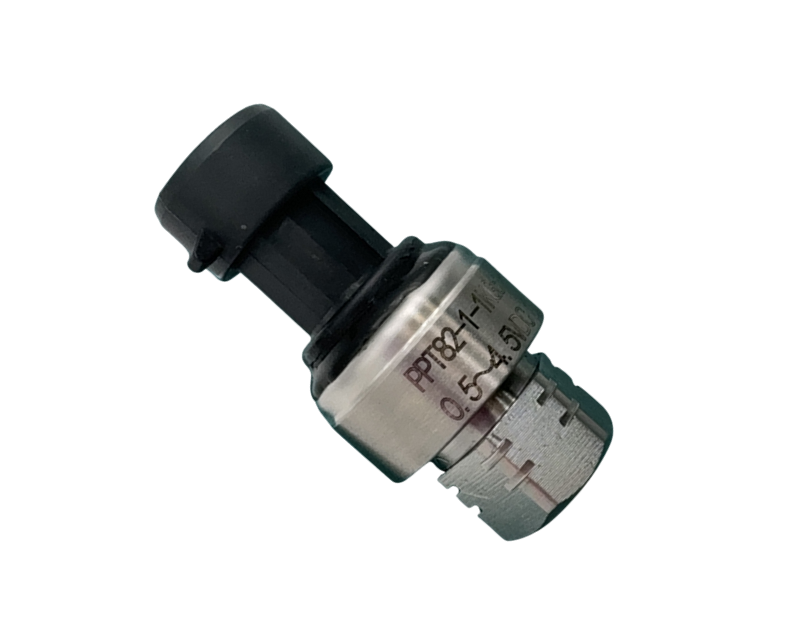
Suction and discharge pressure are the core measurements of a vapor-compression system. A controller uses them to detect low-charge conditions, blocked condenser coils, failed condenser fans, restricted filter driers, and loss of evaporator airflow. Pressure feedback also drives condenser fan speed, variable-speed compressor control, and high- and low-pressure protection.
The PPT82 microfused HVAC pressure transducer uses a MEMS piezoresistive element pressurized on the passive backside of an SS316 media-isolated housing, with 0.25% linearity, a 5 ms response time, and a -20°C to 125°C operating range. For HVAC and refrigeration equipment, the PPT82 can be configured with a female 7/16"-20 UNF Schrader port, the same flare-style service connection found on most air conditioning and heat pump service valves. A Schrader-equipped HVAC pressure sensor threads directly onto an existing access fitting, and the internal depressor opens the valve core as the sensor seats, so it can be installed without brazing in a new port.
Refrigerant and oil compatibility, pressure range, and output signal should be confirmed for each application.
Suction Line, Liquid Line, and Coil Temperature
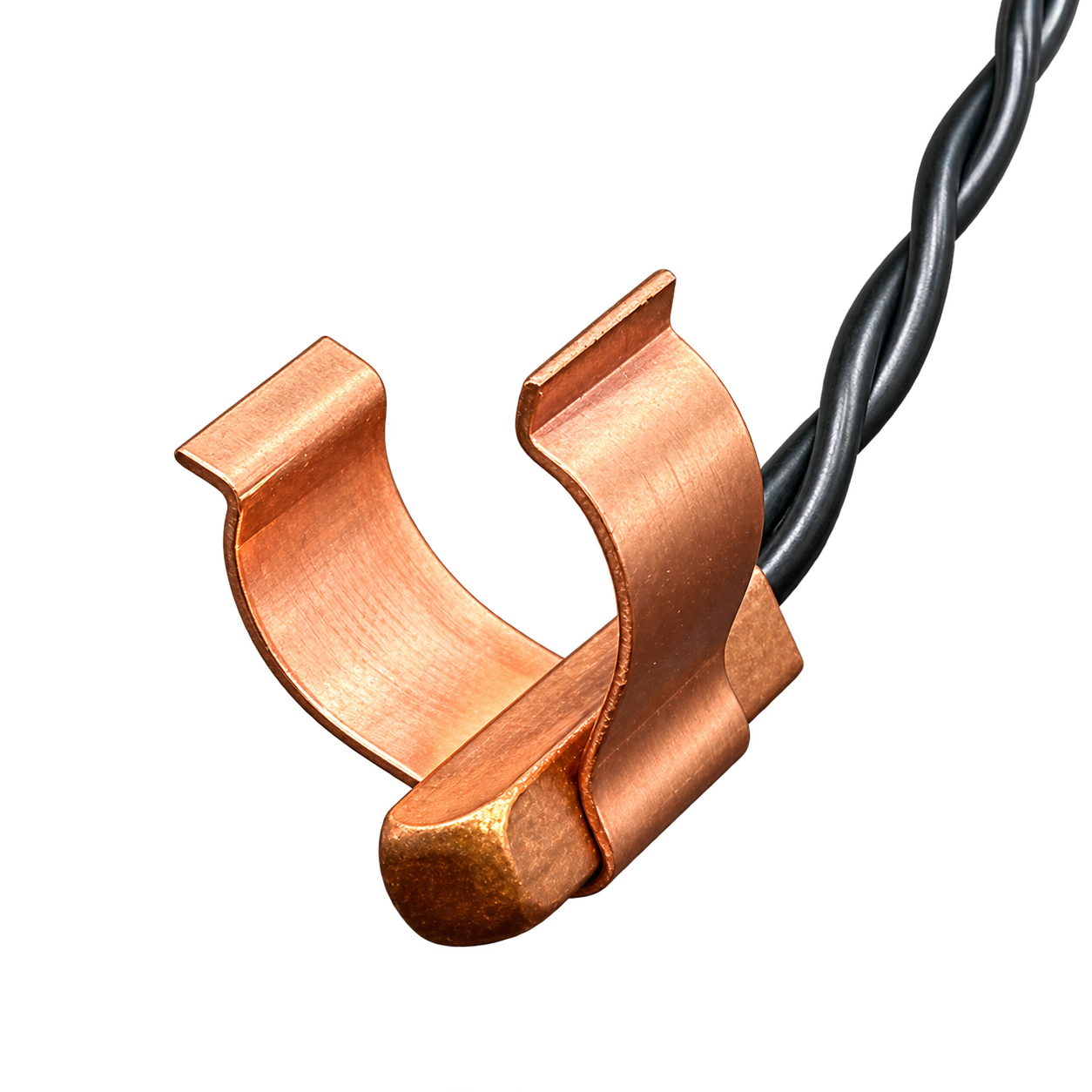
Line temperatures complete the picture. Suction line temperature is used to calculate superheat, liquid line temperature to calculate subcooling, and discharge line temperature to protect the compressor from overheating and oil breakdown. On heat pumps, outdoor coil temperature helps the controller decide when to start and terminate defrost.
The PTS32 clip-on pipe temperature sensor clips directly onto copper tubing, so the measurement point can be added without opening the refrigerant circuit. Firm contact with the pipe provides faster response and a more representative reading of the media inside. A glass-encapsulated NTC element protects against moisture ingress in outdoor units, and the sensor operates from -50°C to 150°C with an IP65 rating.
Pairing the PTS32 with the PPT82 at the same service location gives the controller matched pressure and temperature readings for superheat and subcooling calculations.
Hydronic, Chiller, and Pump Protection
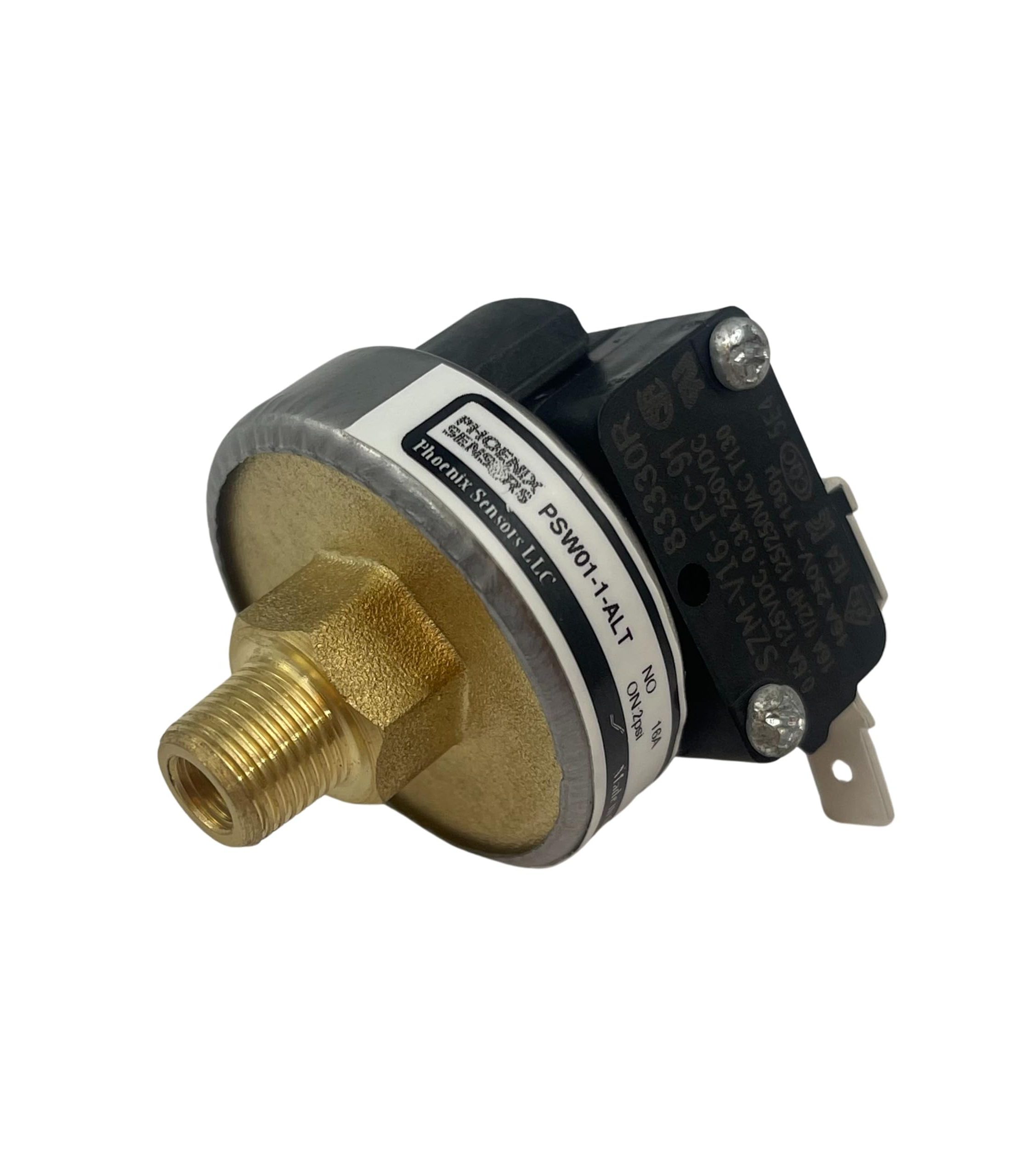
Boilers, chillers, cooling towers, and water-source heat pumps depend on adequate water pressure. Low-pressure cutouts protect circulating pumps from dry running and heat exchangers from overheating, while high-pressure limits protect piping and components.
The PSW01 adjustable pressure switch provides a simple on/off safety signal for these circuits. It uses a one-piece SS316L body, SPST or SPDT contact forms, an adjustable deadband, and a 16 A / 250 VAC contact rating, with standard ranges of 5, 30, 50, 100, and 150 PSI and a -40°C to 80°C operating range. Because a pressure switch can act directly on a pump, burner, or compressor circuit, the PSW01 adds a hardware safety layer that does not depend on controller firmware.
Many OEMs use both: a continuous HVAC pressure sensor for control and diagnostics, and a pressure switch as an independent safety limit.
Custom HVAC Pressure and Temperature Sensors for OEM Equipment
HVAC OEM programs usually need a sensor that fits an existing harness, controller input, and service port. Phoenix Sensors can evaluate and customize:
- Pressure ranges for low-side, high-side, and higher-pressure refrigerant systems
- Female 7/16"-20 UNF Schrader, 1/4"-18 NPT, 1/8" NPT, and other process connections
- Analog and digital output signals
- NTC thermistor curves and temperature ranges
- Clip size and mounting for different tube diameters
- Pressure switch setpoints, deadband, and contact forms
- Cable lengths, connectors, and custom cable assemblies
- Prototype, qualification, and production quantities
HVAC sensors see pressure cycling with every compressor start, outdoor temperature extremes, condensation, vibration, and long service lives. Our pressure sensor selection guide explains how range, overpressure, accuracy, and environment affect sensor choice.
Improving Efficiency, Reliability, and Serviceability
Reliable pressure and temperature data supports more than basic protection. Variable-speed compressors and electronic expansion valves rely on accurate feedback to hold efficiency at part load. Trend data can reveal a slow refrigerant leak, a fouled condenser, or a failing fan before comfort complaints begin.
Better data also helps service teams. A controller that records suction pressure, superheat, and discharge temperature leading up to a fault gives technicians evidence instead of guesswork, and supports refrigerant management practices under EPA Section 608.
Phoenix Sensors provides U.S.-based engineering services and manufacturing for HVAC, refrigeration, and building equipment OEMs. For guidance on how ambient conditions affect readings, see pressure sensor temperature effects.
Frequently Asked Questions
What does an HVAC pressure sensor measure?
An HVAC pressure sensor measures refrigerant, water, or air pressure and converts it to an electrical signal for a controller. In refrigeration circuits it typically monitors suction and discharge pressure for charge diagnostics, compressor protection, fan control, and expansion valve control.
What is a Schrader port pressure transducer?
A Schrader port pressure transducer has a female 7/16"-20 UNF flare connection with an internal depressor. It threads onto a standard HVAC service valve and opens the valve core as it seats, allowing installation on an existing access fitting without brazing.
How is a clip-on pipe temperature sensor used in HVAC?
A clip-on pipe temperature sensor attaches to the outside of copper refrigerant or water lines to measure the temperature of the media inside. It is commonly used for suction line, liquid line, discharge line, and coil temperature without opening the system.
What is the difference between a pressure switch and a pressure transducer?
A pressure transducer provides a continuous signal proportional to pressure, so the controller can trend and act on actual values. A pressure switch opens or closes a contact at a set pressure, providing an independent safety cutout for pumps, burners, or compressors.
Discuss Your HVAC Sensor Requirements
The fastest way to receive a useful recommendation is to share your operating conditions. Helpful information includes:
- Refrigerant or fluid and measurement location
- Normal, minimum, and maximum operating pressure
- Fluid and ambient temperature ranges
- Required output signal and supply voltage
- Process connection, tube size, connector, and cable length
- Accuracy and response-time requirements
- Annual volume and target production date
HVAC and refrigeration OEMs are welcome to send drawings, controller input specifications, and expected production quantities. Contact Phoenix Sensors to review your application with a sensor application specialist.