
Home | Applications |
 Autonomous Surface Vessel Sensors
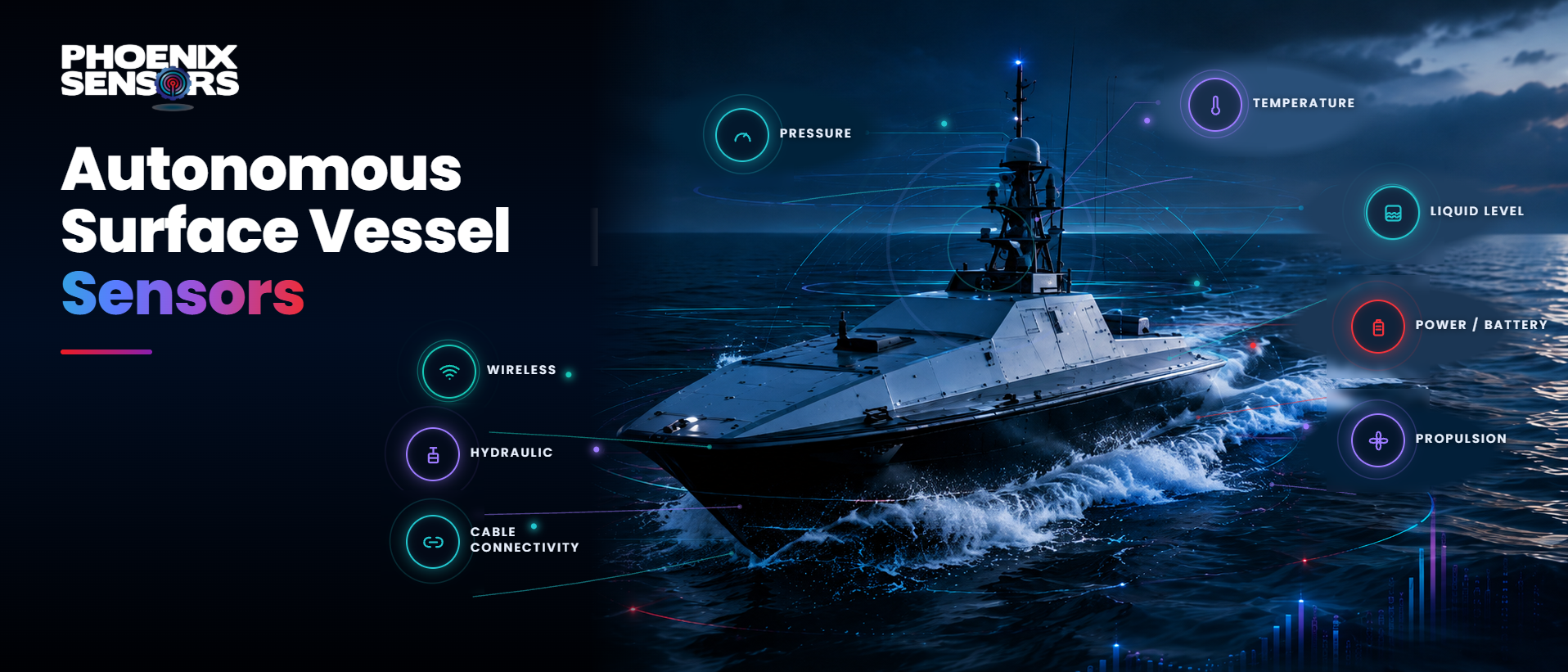
Phoenix Sensors develops custom pressure, temperature, liquid-level, wireless, and cable assembly solutions for autonomous surface vessels, unmanned patrol craft, and long-endurance maritime platforms. Autonomous surface vessel sensors provide the measurement feedback that keeps fuel, propulsion, hydraulic, battery, cooling, and fluid-management systems observable when no crew is aboard to inspect them.
We are a U.S.-based sensor manufacturer in Chandler, Arizona, supporting autonomous maritime programs from prototype development through production.
Sensor Monitoring Across Autonomous Maritime Systems
An autonomous vessel may operate without an onboard crew, but its mechanical, electrical, propulsion, fluid, and thermal-management systems still behave like any other marine platform. Bearings still heat up. Filters still load. Seals still leak. The difference is that no one is walking the engine room to notice it.
Instrumentation replaces that walkaround. Reliable data from USV sensors can support remote equipment diagnostics, early fault detection, condition-based and preventive maintenance, automated alarms and protective actions, fuel and fluid inventory monitoring, thermal-management control, and mission endurance. Catching a pressure drift or a rising bearing temperature early also reduces the risk of secondary equipment damage, which matters when the nearest technician is hours or days away.
The scope of this work continues to grow. The Office of Naval Research Unmanned Surface Vehicle program highlights onboard mechanical and electrical system maintenance as an ongoing research priority for uncrewed platforms, which underscores how much depends on the quality of the sensor data feeding those systems.
Applications for Autonomous Surface Vessel Sensors
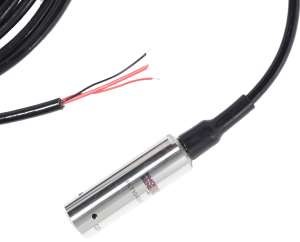
PLT10 Liquid Level Transducer
Fuel and Fluid Systems
Fuel pressure, fuel tank level, transfer-system pressure, pump inlet and outlet pressure, and filter restriction or pressure-drop monitoring all contribute to endurance planning and fault detection. A fuel tank level sensor or diesel tank level sensor supports consumption tracking and endurance planning, while a marine pressure transducer can watch transfer-line and pump pressure. Vessel fluid management extends to bilge liquid level, ballast tank level, coolant reservoir level, freshwater and utility tank level, and monitoring for unexpected fluid accumulation that can flag a leak.
The PLT10 submersible level sensor is one example of a submersible level transmitter that may support bilge, ballast, reservoir, and utility tank applications. Fluid compatibility, liquid density, tank geometry, vessel movement, mounting, venting, and signal filtering must be evaluated for each installation.
Propulsion and Lubrication
An engine oil pressure sensor, gearbox oil pressure and temperature, bearing temperature, motor temperature, generator temperature, and coolant temperature form the core of propulsion-system health monitoring. Trending these values over a long deployment can reveal degradation well before a hard fault occurs.
Hydraulic Systems
A hydraulic pressure transducer on steering pressure, actuator pressure, stabilization-system pressure, and pump pressure, along with hydraulic fluid temperature, supports both control feedback and diagnostics. Because steering and stabilization are control-loop functions, sensor selection here typically emphasizes response, repeatability, and wired signal integrity.
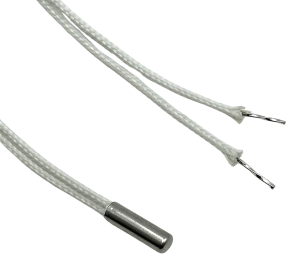
PRTD10-1K-FG RTD Temperature Sensor
Batteries and Power Electronics
Battery pack temperature, charging-system temperature, electric motor temperature, inverter and power-electronics temperature, and sealed enclosure temperature are central to thermal management on hybrid and fully electric platforms.
The PRTD10-1K-FG Pt1000 RTD temperature sensor is one example of a compact RTD temperature sensor that may support monitoring in batteries, motors, bearings, propulsion equipment, power electronics, control enclosures, and thermal-management systems. Suitability for any specific marine, battery, or autonomous vessel application is subject to engineering review and validation.
Environmental and Vessel Monitoring
Ambient temperature, barometric pressure, electronics enclosure conditions, and temperature exposure at interior and exterior locations give operators context for interpreting every other measurement on the vessel.
Wired and Wireless Monitoring
Wireless sensors can be useful for prototype and development testing, temporary instrumentation, retrofit condition monitoring, maintenance diagnostics, hard-to-wire locations, and non-critical auxiliary monitoring. They should not be assumed appropriate for mission-critical control, steering, propulsion, or safety loops. Wired versus wireless architecture should be selected based on measurement criticality, communication reliability, power consumption, cybersecurity, vessel construction, and environmental conditions.
Custom Sensor Solutions for Autonomous Vessels
Most autonomous maritime sensors are not catalog parts. Space is tight, power is limited, and the interface is defined by an existing controller. Phoenix Sensors can evaluate and customize:
- Pressure, temperature, and liquid-level measurement ranges
- Sensor dimensions, packaging, process connections, and mounting methods
- Wetted materials and environmental sealing
- Analog outputs, digital communication, and wireless communication
- Cable lengths, electrical connectors, cable assemblies, and harnesses
- Low-power configurations for long-endurance platforms
- Prototype and production quantities
Sensors for unmanned vessels may encounter salt spray, humidity, condensation, immersion, vibration, mechanical shock, temperature cycling, restricted installation space, long operating periods, limited power availability, fluid and material compatibility constraints, cable and connector exposure, and electromagnetic interference. We do not claim our standard products are already qualified for all of these conditions. Product construction, environmental protection, and testing should be defined around the actual application and verified through validation.
Measurement traceability matters as much as construction. Where a program requires documented accuracy, calibration can be referenced to the national pressure standards maintained by NIST pressure and vacuum calibration services, and we can discuss what level of documentation your application needs.
Supporting Reliable Long-Endurance Operation
Accurate data is what turns an unattended platform into a maintainable one. Trended pressure and temperature values support condition-based maintenance scheduling instead of fixed-interval teardowns. Threshold alarms can trigger protective actions such as load reduction or shutdown before damage propagates. Fuel and fluid level data supports realistic endurance and recovery planning. Together, these measurements extend time on station and reduce the chance that a small failure becomes an unrecoverable one.
Long-duration uncrewed operation is now routine across both defense and civil missions. NOAA’s Uncrewed Marine Systems division operates uncrewed surface vehicles for extended data collection in remote and harsh environments, a profile that places the same endurance and reliability demands on onboard instrumentation.
Phoenix Sensors provides U.S.-based engineering and manufacturing support, with sensor manufacturing in Chandler, Arizona, for autonomous surface vessel sensors and related maritime sensor solutions.
Frequently Asked Questions
What sensors are used on autonomous surface vessels?
Common measurements include fuel and hydraulic pressure, engine and gearbox oil pressure, bearing, motor, battery, and coolant temperature, and liquid level in fuel, bilge, ballast, and reservoir tanks. Environmental sensors monitor enclosure and ambient conditions. The specific mix depends on the propulsion architecture, mission duration, and which systems must be diagnosed remotely.
Can Phoenix Sensors customize sensors for unmanned autonomous surface vessels?
Yes. We can evaluate and configure measurement ranges, packaging, process connections, wetted materials, analog or digital outputs, wireless communication, cable lengths, connectors, harnesses, sealing, and low-power operation. Work is supported from prototype quantities through production at our Chandler, Arizona facility. Final configurations are confirmed through engineering review and application validation.
Are wireless sensors suitable for autonomous maritime applications?
Wireless sensors can work well for development testing, temporary instrumentation, retrofit condition monitoring, and hard-to-wire auxiliary points. They are generally not the right choice for mission-critical control, steering, propulsion, or safety loops. The decision should account for measurement criticality, communication reliability, power draw, cybersecurity, hull construction, and environmental exposure.
Discuss Your Autonomous Vessel Sensor Requirements
The fastest way to get a useful answer is to send us the application details. Helpful information includes:
- Measurement type, required range, and fluid or medium
- Operating temperature and environmental exposure
- Required output and power availability
- Mounting constraints, cable, and connector requirements
- Prototype quantity and estimated production volume
Engineers, integrators, and defense OEMs are welcome to send drawings, environmental conditions, electrical interface needs, and expected production quantities. Contact Phoenix Sensors to review your application with a sensor application specialist.