
Posts by Winter Roberts
HVAC Pressure Sensor and Temperature Sensor Solutions for OEMs
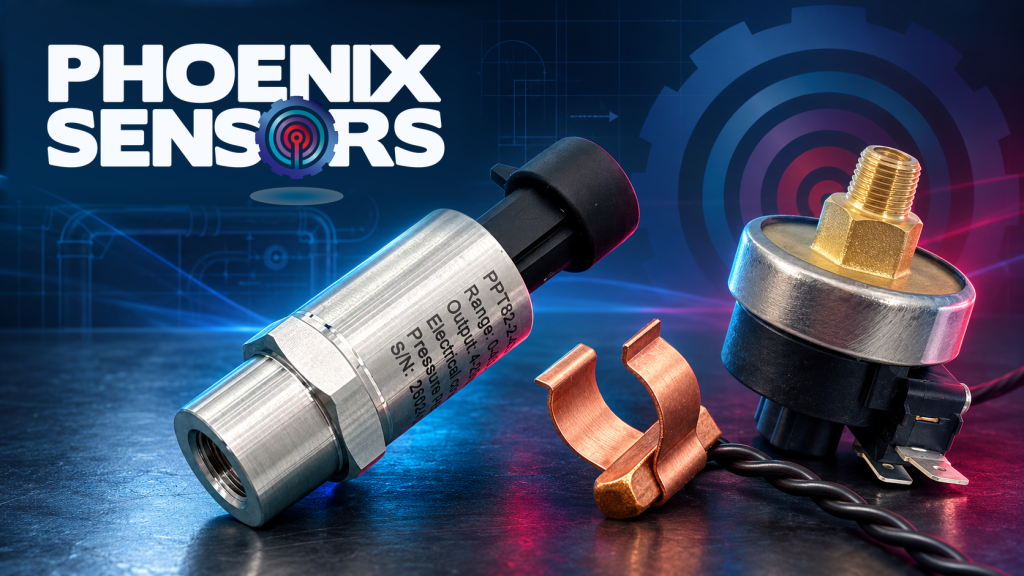
Phoenix Sensors designs and manufactures HVAC pressure sensor and temperature sensor solutions for OEMs building air conditioners, heat pumps, chillers, rooftop units, commercial refrigeration, and hydronic heating equipment. Accurate pressure and temperature feedback lets a controller protect the compressor, verify refrigerant charge, manage defrost, and identify developing faults before they become service calls or warranty…
Read MoreWireless Sensor Monitoring Apps
Which App should I use? Start with what you’re monitoring from: a phone, a PC, a PLC, or a remote gateway. Standard connected BLE Beacon Mode Updated October 2026 Using a phone or tablet?The sensor talks directly to your device. No gateway needed. 1–4 sensors WEXS Simple local monitoring and logging. iOS · Android$4.99 5–10…
Read MoreAutonomous Aircraft Sensors for Military UAVs
Autonomous Aircraft Sensors for Military UAVs Phoenix Sensors develops custom pressure, temperature, wireless, and cable assembly solutions for autonomous aircraft, military UAVs, collaborative combat aircraft, and long-endurance unmanned aerial systems. Autonomous aircraft sensors provide the measurement feedback needed to monitor fuel, lubrication, propulsion, hydraulic, pneumatic, battery, thermal-management, and environmental systems when no crew is aboard…
Read MoreAutonomous Surface Vessel Sensors
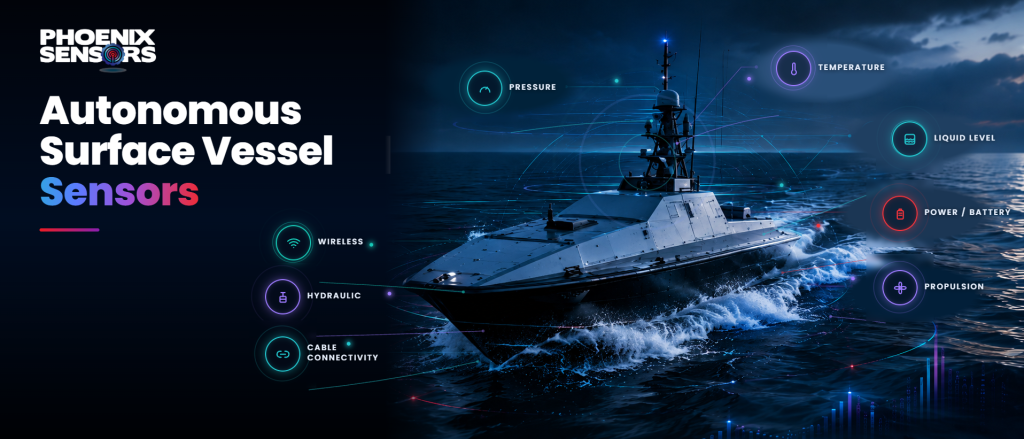
Phoenix Sensors develops custom pressure, temperature, liquid-level, wireless, and cable assembly solutions for autonomous surface vessels, unmanned patrol craft, and long-endurance maritime platforms. U.S.-based engineering and manufacturing support from Chandler, Arizona.
Read MorePressure Sensor Vibration: Why Sensors Fail and How to Reduce the Risk
Vibration rarely breaks a sensor outright. It fatigues one weak point over millions of cycles. Here is how pressure sensor vibration failure develops and what to review before it does.
Read MoreWhat Causes Pressure Sensor Zero Shift?
When a sensor no longer reads zero at atmospheric pressure, the cause may be mechanical, electrical, environmental, or in your test setup. Here is how to tell them apart.
Read MoreWhy Pressure Sensors Fail After Passing Bench Testing
A sensor that passes bench testing can still fail in service. Here are the pressure sensor failure causes that lab tests miss, and how to validate against real conditions.
Read MorePressure Sensor Troubleshooting: Fix Common Faults
Master pressure sensor troubleshooting for no output, erratic readings, and zero shift. Get field-ready DMM steps and expert support from Phoenix Sensors.
Read MoreSubsea Pressure Transducers Built for the Conditions You Actually Work In
When a sensor fails subsea, the cost isn’t just the part. It’s downtime, a recovery operation, and an unexpected failure at depth. Phoenix Sensors designs custom subsea pressure transducers built around your actual environment including the depth rating, media, connector requirements, and pressure range. U.S.-manufactured, engineer-to-engineer support, no catalog compromises. Contact Phoenix Sensors to discuss…
Read MorePressure Sensor Temperature Effects: Causes & Fixes
How Temperature Affects Pressure Sensor Performance Pressure sensor temperature effects show up as soon as a transducer leaves the lab and enters real equipment. As temperature changes, the sensing element, electronics, oil fill, seals, and housing can all influence the output signal. For OEM engineers, the key is to review both the compensated temperature range…
Read More